Types of Dental Bridges
Understanding your tooth replacement options

Not all dental bridges are the same. The right type for you depends on where the missing tooth is located, the health of surrounding teeth, and your long-term goals. Here's a guide to your options.
Traditional Dental Bridge
The Most Common Type
A traditional bridge consists of:
- Pontic – The artificial tooth (or teeth) replacing the missing one
- Two crowns – Placed on teeth on either side of the gap (abutment teeth)
How It Works
The crowns anchor the pontic in place, "bridging" the gap. Adjacent teeth must be prepared (shaped) to receive crowns.
Best For
- Missing tooth with healthy teeth on both sides
- Back teeth (molars, premolars)
- Patients wanting fixed (non-removable) solution
- When implants aren't preferred or possible
Considerations
- Requires altering healthy adjacent teeth
- Adjacent teeth support the bridge long-term
- If one supporting tooth fails, bridge may need replacement
Lifespan
10-15 years or longer with good care.
Cantilever Bridge
When There's Only One Adjacent Tooth
A cantilever bridge is anchored on only one side:
- Pontic – The replacement tooth
- One crown – On a single adjacent tooth
How It Works
Similar to traditional bridge, but attached to just one tooth instead of two.
Best For
- Missing tooth with only one adjacent tooth available
- Areas with lower bite force
- Front teeth in some cases
Considerations
- More stress on single supporting tooth
- Not ideal for back teeth (high chewing forces)
- Less common than traditional bridges
- May have shorter lifespan
Lifespan
5-10 years typically (less than traditional due to single-tooth support).
Maryland Bridge (Resin-Bonded Bridge)
The Conservative Option
A Maryland bridge uses:
- Pontic – The replacement tooth
- Metal or porcelain wings – Bonded to the back of adjacent teeth
How It Works
Instead of crowns, thin wings attach to the backs of neighboring teeth. Minimal or no tooth preparation required.
Best For
- Front teeth (lower bite forces)
- Patients wanting to preserve adjacent teeth
- Younger patients
- Temporary or interim solutions
- When adjacent teeth are healthy and intact
Considerations
- Not as strong as traditional bridges
- Not suitable for back teeth
- Wings may debond over time
- May need reattachment or replacement
Lifespan
5-10 years typically.
Implant-Supported Bridge
The Premium Option
An implant-supported bridge uses dental implants instead of natural teeth for support:
- Pontics – Replacement teeth
- Implants – Titanium posts placed in jawbone
- No damage to natural teeth
How It Works
Implants are surgically placed, allowed to heal and fuse with bone, then a bridge is attached to the implants.
Best For
- Multiple missing teeth in a row
- Patients wanting to preserve natural teeth
- Long-term, permanent solution
- Patients with adequate bone
- When adjacent teeth aren't suitable anchors
Considerations
- Requires surgery
- Longer treatment timeline
- Higher initial cost
- Most durable option long-term
- Preserves jawbone
Lifespan
Implants: 25+ years or lifetime. Bridge portion: 10-15+ years.
Comparison Chart
| Feature | Traditional | Cantilever | Maryland | Implant-Supported |
|---|---|---|---|---|
| <strong>Support</strong> | 2 natural teeth | 1 natural tooth | Wings bonded to teeth | Dental implants |
| <strong>Tooth preparation</strong> | Significant | Significant | Minimal | None |
| <strong>Strength</strong> | Very good | Moderate | Lower | Excellent |
| <strong>Best location</strong> | Anywhere | Front/low-force | Front teeth | Anywhere |
| <strong>Preserves bone</strong> | No | No | No | Yes |
| <strong>Lifespan</strong> | 10-15 years | 5-10 years | 5-10 years | 15-25+ years |
| <strong>Cost</strong> | $$ | $$ | $ | $$$ |
| <strong>Treatment time</strong> | 2-3 weeks | 2-3 weeks | 2-3 weeks | 3-6 months |
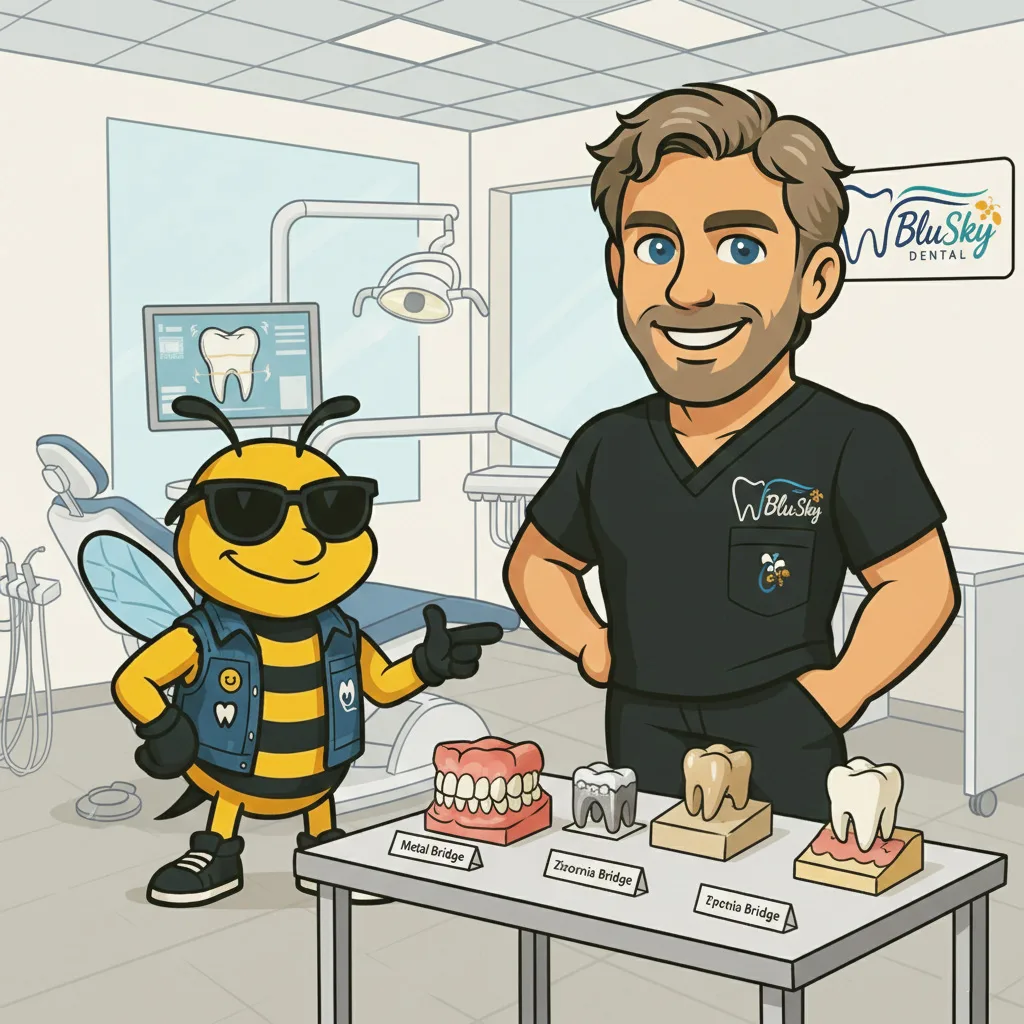
Materials Used
Porcelain-Fused-to-Metal (PFM)
- Metal base with porcelain covering
- Strong and natural-looking
- Traditional choice for back teeth
- Metal may show at gumline over time
All-Ceramic / All-Porcelain
- No metal, all tooth-colored material
- Most natural appearance
- Great for front teeth
- Zirconia offers strength comparable to PFM
Zirconia
- Strong ceramic material
- Excellent durability
- Natural appearance
- Good for any location
Gold Alloy
- Extremely durable
- Gentle on opposing teeth
- Visible metal color
- Used for back teeth when appearance less critical
How to Choose
Consider These Factors
Location of Missing Tooth
- Front teeth: Appearance matters most
- Back teeth: Strength matters most
Health of Adjacent Teeth
- Healthy teeth: Consider implant or Maryland to preserve them
- Already compromised teeth: Traditional bridge adds protection
Bone Health
- Good bone: Implants are an option
- Bone loss: May need grafting or choose tooth-supported bridge
Budget
- Limited: Traditional or Maryland
- Investment-minded: Implant-supported
Long-Term Goals
- Quick solution: Traditional bridge
- Longest-lasting: Implant-supported
Our Recommendation Process
We'll evaluate:
- Your specific situation
- Adjacent tooth health
- Bone levels (with X-rays)
- Your preferences and budget
- Long-term considerations
Then recommend the best option for you.
Find Your Best Option
Expert Bridge Recommendations
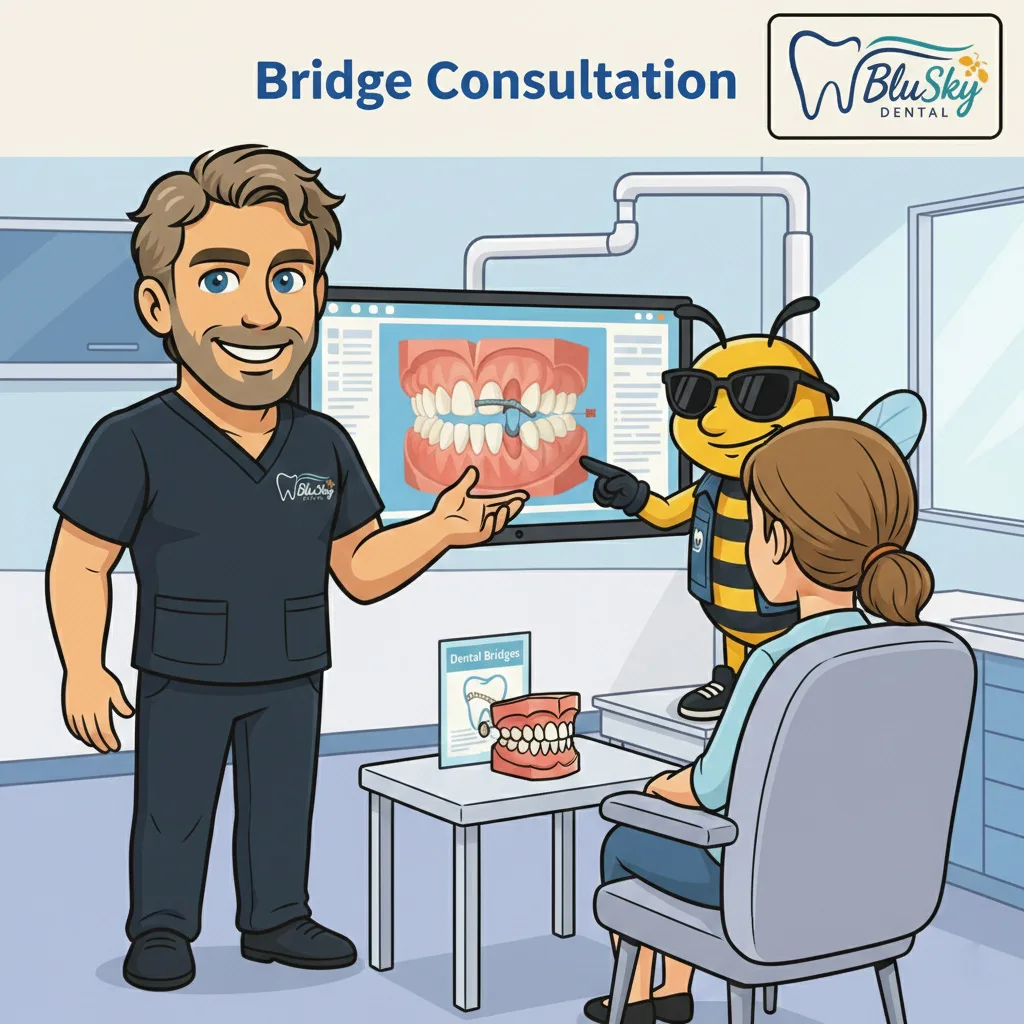
We'll help you understand which bridge type is right for your situation. Our team evaluates your specific needs and recommends the best long-term solution.

Frequently Asked Questions
Implant-supported bridges typically last longest because implants are permanent and don't depend on natural teeth.
Often yes. In fact, if adjacent teeth already have large fillings, crowning them for a bridge may actually protect them.
No. Maryland bridges are best for front teeth where bite forces are lower. They may debond under heavy chewing forces.
Yes. If you have a traditional bridge and later want implants, this can often be done. The bridge is removed, implant(s) placed, and new restoration made.
Find Your Best Option
We'll help you understand which bridge type is right for your situation.
Call: (613) 728-1511
Address: 20 – 1620 Scott Street, Ottawa, ON K1Y 4S7
At BluSky we BEElieve in bringing life to your smile. 🐝