
Tongue Tie Release in Ottawa: Frenectomy at BluSky Dental
Improving speech, feeding, and airway function

A tongue tie (ankyloglossia) restricts tongue movement, affecting feeding, speech, sleep, and oral development. At BluSky Dental Holland Cross, we provide tongue tie assessment and release for patients of all ages. This simple procedure can have profound effects on quality of life.
Serving Westboro, Hintonburg, Wellington West, Little Italy, and Downtown Ottawa with tongue tie services.
What Is a Tongue Tie?
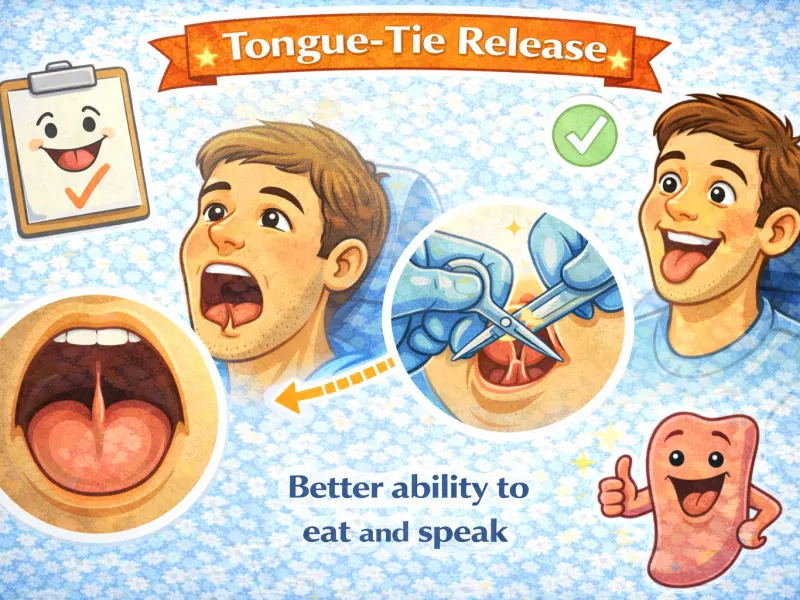
A tongue tie occurs when the frenulum—the thin tissue connecting the tongue to the floor of the mouth—is abnormally short, thick, or tight. This restricts tongue movement, potentially affecting:
- Breastfeeding (in infants)
- Speech development
- Eating and swallowing
- Airway and breathing
- Dental development
- Oral posture
Lip ties similarly involve the tissue connecting the lip to the gum and can compound tongue tie effects.
Signs of Tongue Tie
In Infants
- Difficulty latching during breastfeeding
- Poor weight gain
- Clicking sounds when feeding
- Maternal nipple pain during nursing
- Prolonged feeding times
- Gagging or choking
In Children
- Speech articulation difficulties
- Difficulty with certain sounds (l, r, t, d, s, z)
- Messy eating
- Slow eating
- Picky eating (avoiding certain textures)
- Open mouth posture
In Adults
- Limited tongue movement
- Difficulty eating certain foods
- Speech concerns
- Sleep-disordered breathing
- Neck and shoulder tension
- TMJ problems
- History of orthodontic relapse
The Frenectomy Procedure
Assessment
We thoroughly evaluate:
- Frenulum attachment and appearance
- Tongue range of motion
- Functional impacts
- Related oral conditions
Procedure Options
Laser Frenectomy (Preferred):
- Precise, controlled release
- Minimal bleeding
- Reduced discomfort
- Faster healing
- Usually no sutures needed
Surgical Frenectomy:
- Traditional blade technique
- May require sutures
- Effective release
What to Expect
- Local anesthetic numbs the area
- Release takes only minutes
- Immediate improved movement
- Home exercises begin same day
Recovery
Infants:
- May feed immediately after
- Brief fussiness then improvement
- Stretching exercises several times daily for 2-4 weeks
Children and Adults:
- Mild discomfort for a few days
- Soft diet initially
- Stretching/exercises crucial for optimal results
- Improvement continues over weeks
Importance of Follow-Up Care
Releasing the tie is only part of treatment. Post-procedure exercises and, often, myofunctional therapy are essential to:
- Prevent reattachment
- Develop full range of motion
- Establish new movement patterns
- Maximize functional improvement
We provide detailed instructions and may coordinate with myofunctional therapists, lactation consultants, or speech therapists.
Who Should Consider Assessment?
Infants with Feeding Challenges
Early assessment can identify ties affecting breastfeeding, potentially avoiding unnecessary weaning.
Children with Speech Delays
Tongue ties can contribute to articulation difficulties—evaluation is worthwhile when speech concerns exist.
Adults with Ongoing Issues
It's never too late to address a tongue tie. Adults often report improvements in speech, eating, breathing, and comfort after release.
Before or After Orthodontics
Tongue position affects dental arch development. Addressing ties can support orthodontic treatment and prevent relapse.
Those with Sleep Breathing Issues
Tongue ties can contribute to airway obstruction during sleep. Evaluation is part of comprehensive sleep assessment.
Frequently Asked Questions
Tongue ties can be released at any age—from newborns to adults. The best timing depends on the individual situation and symptoms.
For infants, the procedure is quick with minimal discomfort. For older children and adults, local anesthesia ensures comfort. Post-procedure soreness is typically mild.
Some children naturally improve; others benefit from speech therapy to develop new patterns. We can recommend appropriate follow-up.
Medical and dental coverage varies. We can provide documentation for insurance claims.
Schedule Your Tongue Tie Assessment
Restricted tongue movement affects more than you might realize. At BluSky Dental Holland Cross, tongue tie evaluation and release can improve feeding, speech, and quality of life. Our Westboro location serves Ottawa patients of all ages.
Call: (613) 728-1511
Address: 20 – 1620 Scott Street, Ottawa, ON K1Y 4S7
At BluSky we BEElieve in bringing life to your smile. 🐝