Home › Blog › Oral Health and Your Whole Body
Oral Health TipsOral Health and Your Whole Body
Your Mouth Is Not Separate From the Rest of Your Body
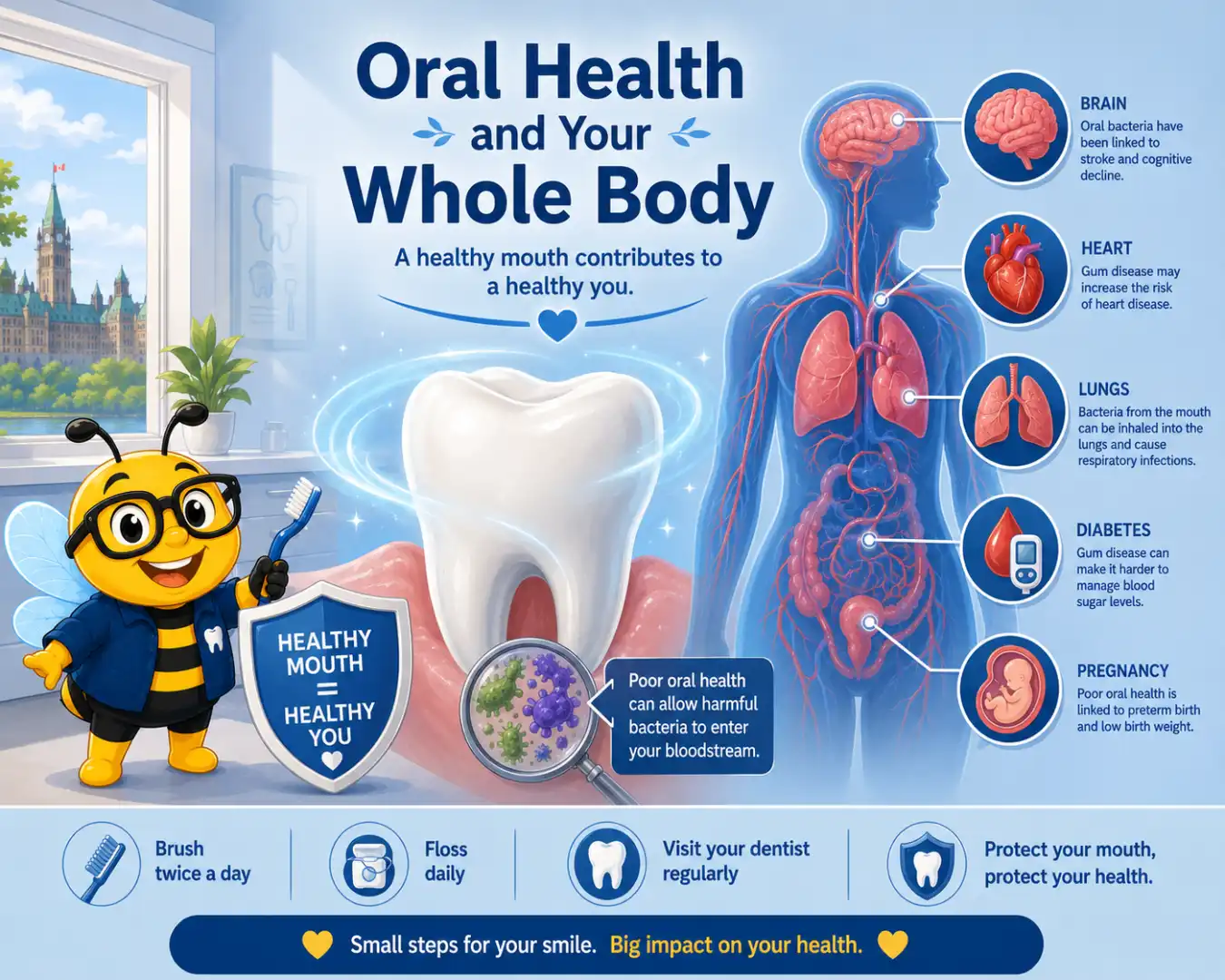
For decades, medicine and dentistry operated in silos. Your physician looked after everything from the neck down; your dentist took care of everything from the neck up. We now know that this division was artificial - and potentially harmful. A growing body of research has demonstrated that the health of your mouth is deeply connected to the health of your heart, your blood sugar regulation, your pregnancy outcomes, and your overall systemic wellness.
The connection is not subtle. Chronic gum disease (periodontitis) produces a persistent state of inflammation in the body, releases bacteria into the bloodstream, and triggers immune responses that have measurable effects on organs and systems far from the oral cavity. Understanding these links isn't just an academic exercise - it has real implications for how you care for your teeth and how often you see your Ottawa dentist for professional cleanings.
In this article, we'll translate the science into plain language, explain what it means for your daily health, and describe how your dental team at BluSky Dental works to protect not just your smile but your whole-body well-being.
Gum Disease: A Quick Primer
Before we explore the systemic connections, it helps to understand what gum disease actually is. Periodontal disease begins with bacterial plaque - the sticky film that forms on your teeth throughout the day. When plaque isn't removed through regular brushing, flossing, and professional dental cleanings, it hardens into tartar (calculus) and triggers an inflammatory response in the gum tissue.
The early stage, gingivitis, is characterised by red, swollen gums that may bleed when you brush. Gingivitis is reversible with proper care. If left untreated, however, it can progress to periodontitis - a more serious condition in which the inflammation extends deeper, destroying the bone and connective tissue that hold your teeth in place.
Here's the critical detail: periodontitis is not a localised infection. The inflamed gum tissue creates an open wound surface - estimated at roughly the size of the palm of your hand in moderate cases - through which oral bacteria can enter the bloodstream. Once in the blood, these bacteria and the inflammatory molecules they trigger can affect distant organs.
BluSky Dental offers oral bacteria testing that can identify the specific pathogens present in your mouth, helping us tailor treatment to your individual bacterial profile rather than taking a one-size-fits-all approach.
Gum Disease and Cardiovascular Health
The link between periodontal disease and heart disease is one of the most studied connections in oral-systemic medicine. Numerous large-scale studies have found that people with moderate to severe gum disease have a significantly higher risk of cardiovascular events, including heart attack and stroke.
The mechanisms behind this connection involve several pathways:
- Chronic inflammation from gum disease can damage blood vessels and contribute to the buildup of plaque in the arteries.
- Bacteria from infected gums can enter the bloodstream, attach to damaged areas in the blood vessels, and contribute to arterial plaque formation.
- Oral bacteria can, in some cases, infect the lining or valves of the heart, a condition known as endocarditis.
- Gum disease and heart disease share common risk factors, such as smoking, diabetes, and poor diet, which can compound the effect.
The Bidirectional Relationship Between Diabetes and Gum Disease
If the heart disease connection is well-established, the relationship between diabetes and periodontal disease is even more striking - and it runs in both directions.
People with diabetes are two to three times more likely to develop periodontitis than those without diabetes. The reasons are well understood: elevated blood sugar impairs the immune system's ability to fight bacterial infections, reduces blood flow to the gums, and slows tissue healing. High glucose levels in saliva also feed the bacteria responsible for gum disease.
But here's where it gets particularly interesting: severe gum disease makes it harder to control blood sugar. The chronic inflammation from periodontitis increases insulin resistance, meaning the body needs more insulin to process glucose effectively. Studies have shown that treating periodontal disease in diabetic patients can improve HbA1c levels (a measure of long-term blood sugar control) by a clinically meaningful amount - sometimes comparable to adding a second diabetes medication.
This bidirectional relationship creates a vicious cycle: uncontrolled diabetes worsens gum disease, which in turn makes diabetes harder to manage. Breaking the cycle requires attention to both conditions simultaneously.
At BluSky Dental, we coordinate closely with our diabetic patients' healthcare teams. If you have Type 1 or Type 2 diabetes, we may recommend more frequent dental cleanings - typically every three to four months rather than the standard six - to keep bacterial levels under control and reduce the inflammatory burden on your body.
Oral Health During Pregnancy
Pregnancy brings dramatic hormonal changes that can significantly affect your gums. Elevated levels of progesterone and oestrogen increase blood flow to gum tissue and alter the body's inflammatory response to bacterial plaque, making pregnant women more susceptible to gingivitis and, in some cases, benign growths called pregnancy tumours (pyogenic granulomas).
Beyond the local effects, research has linked severe periodontal disease during pregnancy to several adverse outcomes:
- An increased risk of preterm birth and low birth weight, as inflammation and bacteria from gum infections can affect the developing baby.
- Gestational diabetes, since gum disease can make blood sugar harder to control during pregnancy.
- Preeclampsia, a serious pregnancy complication that some research has linked to gum disease.
Other Systemic Connections Your Dentist Watches For
Heart disease, diabetes, and pregnancy outcomes are the most heavily researched connections, but the oral-systemic relationship extends further. Emerging evidence links poor oral health to:
- Respiratory infections and disease.
- Rheumatoid arthritis.
- Alzheimer's disease, a connection that researchers are still investigating.
Protecting Your Whole-Body Health Through Oral Care
The practical implications of the oral-systemic connection are empowering: taking care of your mouth is one of the most accessible things you can do for your overall health. Here's how to make the most of this knowledge:
- Brush twice a day and floss daily to remove plaque before it hardens into tartar.
- Keep up with regular professional cleanings and exams, scheduling them more often (every three to four months) if you have gum disease, diabetes, or other risk factors.
- Don't smoke, and manage conditions such as diabetes that are closely tied to gum health.
- Eat a balanced diet, limit sugary snacks, and drink plenty of water.
- See your dentist promptly if your gums bleed, swell, or recede, so early gum disease can be treated before it progresses.
How BluSky Dental Supports Your Overall Health
At BluSky Dental, we see ourselves as partners in your total health - not just your dental health. Our approach reflects the understanding that what happens in your mouth affects your entire body, and we integrate this awareness into every aspect of care.
During your appointments at any of our four Ottawa locations, our team conducts thorough soft-tissue evaluations, periodontal assessments, and oral cancer screenings. We ask about your medical history, your medications, and any changes to your general health - not to be intrusive, but because this information directly affects how we care for your teeth and gums.
Our philosophy of care prioritises prevention, early detection, and patient education. We believe that an informed patient is an empowered patient, and we take time to explain the connections between your oral health and your systemic well-being in terms that make sense.
Whether you're managing diabetes, monitoring cardiovascular risk, expecting a child, or simply want to stay as healthy as possible, your dental care is a vital piece of the puzzle. New patients are always welcome, and we'll work with your medical team to ensure your care is coordinated and comprehensive.
Your Oral Health Affects Everything
Don't let gum disease quietly undermine your overall wellness. Schedule a comprehensive dental examination at BluSky Dental and take a proactive step toward whole-body health.

Why Preventive Dentistry Saves Thousands
The math on putting off the dentist: how routine cleanings and exams cost a fraction of the crowns, root canals, and implants that neglect leads to.
Read more →
Benefits of Regular Dental Cleanings
More than just a polish—see how routine professional cleanings protect your whole-body health.
Read more →
Best Foods for Healthy Teeth
Eat your way to stronger enamel and a brighter smile with these tooth-friendly picks.
Read more →