Home › Blog › Why Your Dentist's Technology Matters More Than You Think
Technology & InnovationWhy Your Dentist's Technology Matters More Than You Think
It's Not Just About the Chair You Sit In
When most people choose an Ottawa dentist, they think about location, hours, and whether the office accepts their insurance. Those things matter, of course. But there is one factor that quietly shapes every part of your experience, from how accurately your dentist diagnoses a problem to how comfortable you feel during treatment, and that's the technology your dental clinic invests in.
Dental technology has advanced dramatically over the past decade. The difference between an Ottawa dental clinic using older equipment and one equipped with modern imaging, design software, and precision instruments can mean the difference between multiple appointments and a single visit, between guesswork and certainty, and between discomfort and a surprisingly smooth experience.
At BluSky Dental, with four locations across Ottawa, we've made a deliberate choice to invest in advanced dental technology because we've seen firsthand how it changes outcomes for patients. This article walks you through the key technologies that matter most and explains, in plain language, why they should factor into your next dental decision.
3D Cone-Beam Imaging: Seeing What Traditional X-Rays Miss
Traditional dental X-rays give your dentist a flat, two-dimensional picture of your teeth and jaw. They've been the standard for decades, and they're still useful for spotting cavities and checking basic bone levels. But they have real limitations. A flat image can't show depth, can't reveal the precise position of a nerve canal, and can't map the three-dimensional contours of your jawbone.
3D cone-beam computed tomography (CBCT) changes that entirely. In a single, quick scan that takes about 15 seconds, a cone-beam unit captures a detailed three-dimensional model of your teeth, jaw, sinuses, and surrounding structures. Your dentist can rotate, zoom, and slice through that model from any angle.
What does this mean for you as a patient? Consider dental implants. Placing an implant without 3D imaging is a bit like hanging a picture on a wall without knowing where the electrical wires run behind it. With CBCT, your dentist can see exactly how much bone is available, where the nerves are, and what angle provides the strongest, longest-lasting result. At our Holland Cross location near Westboro, just steps from the Transitway and a short walk from Tunney's Pasture station, we use 3D imaging to plan guided implant surgeries with a level of precision that simply wasn't possible a generation ago.
3D imaging also plays a crucial role in diagnosing conditions that are easy to miss on flat X-rays, including hairline fractures, hidden infections at the root tip, impacted teeth, and airway concerns.
CAD/CAM and Same-Day Crowns: One Visit Instead of Three
If you've ever needed a dental crown, you probably remember the traditional process: an impression made with goopy putty, a temporary crown placed over your tooth, and then a two- to three-week wait while a lab fabricated the final restoration. You'd come back for a second appointment, hope the crown fit properly, and sometimes need additional adjustments.
CAD/CAM (computer-aided design and manufacturing) dentistry compresses that entire process into a single appointment. Here's how it works: your dentist takes a digital scan of your tooth (no putty, no gagging), and the software creates a precise 3D model on screen. The dentist then designs your crown digitally, adjusting the shape, bite, and contours in real time. Once the design is approved, an in-office milling unit carves your crown from a solid block of high-quality ceramic in roughly 15 to 20 minutes.
The result is a same-day crown that fits accurately because it was designed from your actual digital scan rather than from a physical impression that can distort. You leave with your permanent restoration in place: no temporary, no second appointment, no extra time off work.
For busy Ottawa professionals commuting through the downtown core, or parents juggling school pick-ups in neighbourhoods like Westboro, Hintonburg, or Kanata, the convenience of a single-visit crown is significant. But the real advantage is precision. Digital scans capture detail at a level that traditional impressions simply cannot match, which means better-fitting crowns and longer-lasting restorations.
Digital Impressions: The End of the Goop
Even if you don't need a crown, digital impression technology improves many other procedures. Whether your dentist is planning Invisalign clear aligners, designing a bridge, or mapping out a cosmetic makeover with Digital Smile Design, the process starts with capturing the shape of your teeth.
Traditional impressions involve filling a tray with alginate or silicone material and pressing it against your teeth for several minutes. For patients with a strong gag reflex, this can be genuinely unpleasant. And the resulting impression can be affected by air bubbles, movement, or material shrinkage.
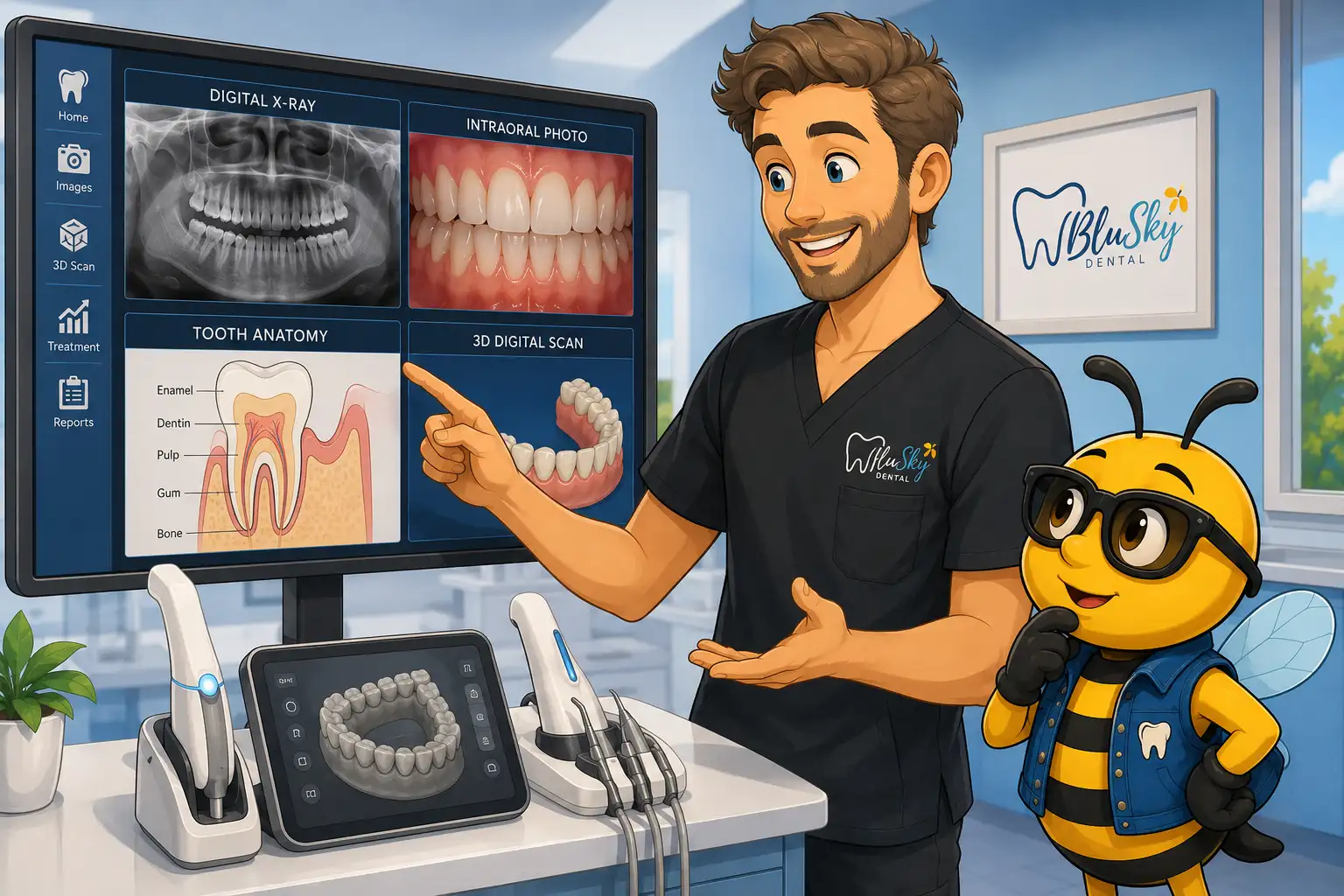
A digital intraoral scanner replaces all of that. The wand-shaped scanner moves across your teeth, capturing thousands of data points per second and building a precise 3D model on screen. It's faster, more comfortable, and more accurate. If the dentist needs to re-scan a section, they simply pass the wand over that area again, no starting from scratch.
Patients regularly tell us that this is one of the most noticeable differences when they switch to a technology-forward clinic. It's a small change that makes a surprisingly big impression.
Microscope-Assisted Root Canals: Precision Where It Matters Most
Root canals have a reputation for being painful and unpredictable. Much of that reputation comes from an era when dentists were working essentially by feel, navigating tiny canal systems inside your tooth without being able to see what they were doing in fine detail.
Microscope-assisted endodontics changes the equation. A dental operating microscope magnifies the treatment area up to 25 times, flooding the field with bright, focused light. Under magnification, your dentist can identify canal openings that would otherwise be invisible, detect hairline cracks, and remove infected tissue with far greater precision.
Why Technology Investment Reflects a Clinic's Philosophy
Advanced dental equipment is expensive. A cone-beam CT scanner, a CAD/CAM milling unit, and a dental microscope each represent a significant financial commitment. Clinics that make these investments are signalling something important about their approach to care: they prioritise accuracy, efficiency, and patient comfort over short-term cost savings.
At BluSky Dental, Dr. Mark McCullough founded the practice with a clear philosophy: that patients deserve access to the same level of technology and precision found in specialist offices, right in their neighbourhood general dental clinic. With over 25 years of experience, Dr. McCullough has seen how each generation of technology has improved patient outcomes, and he's committed to staying at the forefront.
That philosophy extends beyond equipment. Our multilingual team communicates in over 18 languages, ensuring that patients across Ottawa's diverse communities can discuss their treatment options clearly and comfortably. We participate in the Canadian Dental Care Plan (CDCP) and offer direct insurance billing, because removing barriers to care is just as important as the technology we use to provide it.
When you're evaluating a dental clinic (whether you're in Barrhaven, Orleans, Nepean, or right here in the west end near Holland Cross), take a moment to ask what technology they use. The answer tells you a great deal about the kind of care you can expect.
What to Look for in a Technology-Forward Dental Clinic
Not every dental office advertises its equipment list on the front door, so knowing what to ask about can help you make a more informed choice.
Better Technology Means Better Outcomes: Here's the Evidence
It's reasonable to wonder whether all this technology actually makes a measurable difference, or whether it's simply a way for clinics to justify higher fees. The evidence is clear: modern dental technology consistently produces better clinical outcomes.
Research consistently shows that computer-guided implant procedures result in more accurate placement, fewer complications, and faster healing compared to freehand techniques. CAD/CAM restorations demonstrate fit accuracy comparable to or better than lab-fabricated crowns, with same-day delivery. And microscope-assisted root canals significantly improve identification of accessory canals and overall treatment success rates.
For patients, the practical translation is straightforward: fewer appointments, less time in the chair, more predictable results, and restorations that last longer. That's not marketing; it's the measurable impact of choosing a clinic that invests in the tools to do the job right.
Whether you're visiting for a cleaning or considering a full smile makeover, the technology behind your care shapes every step. At BluSky Dental, we believe you deserve to know that.
Experience the Difference Modern Dental Technology Makes
Ready to see how advanced technology can improve your dental care? Our team across four Ottawa locations is here to help with 3D imaging, same-day crowns, microscope-assisted treatments, and a multilingual team that speaks your language. Book a consultation today and discover why thousands of Ottawa families trust BluSky Dental.
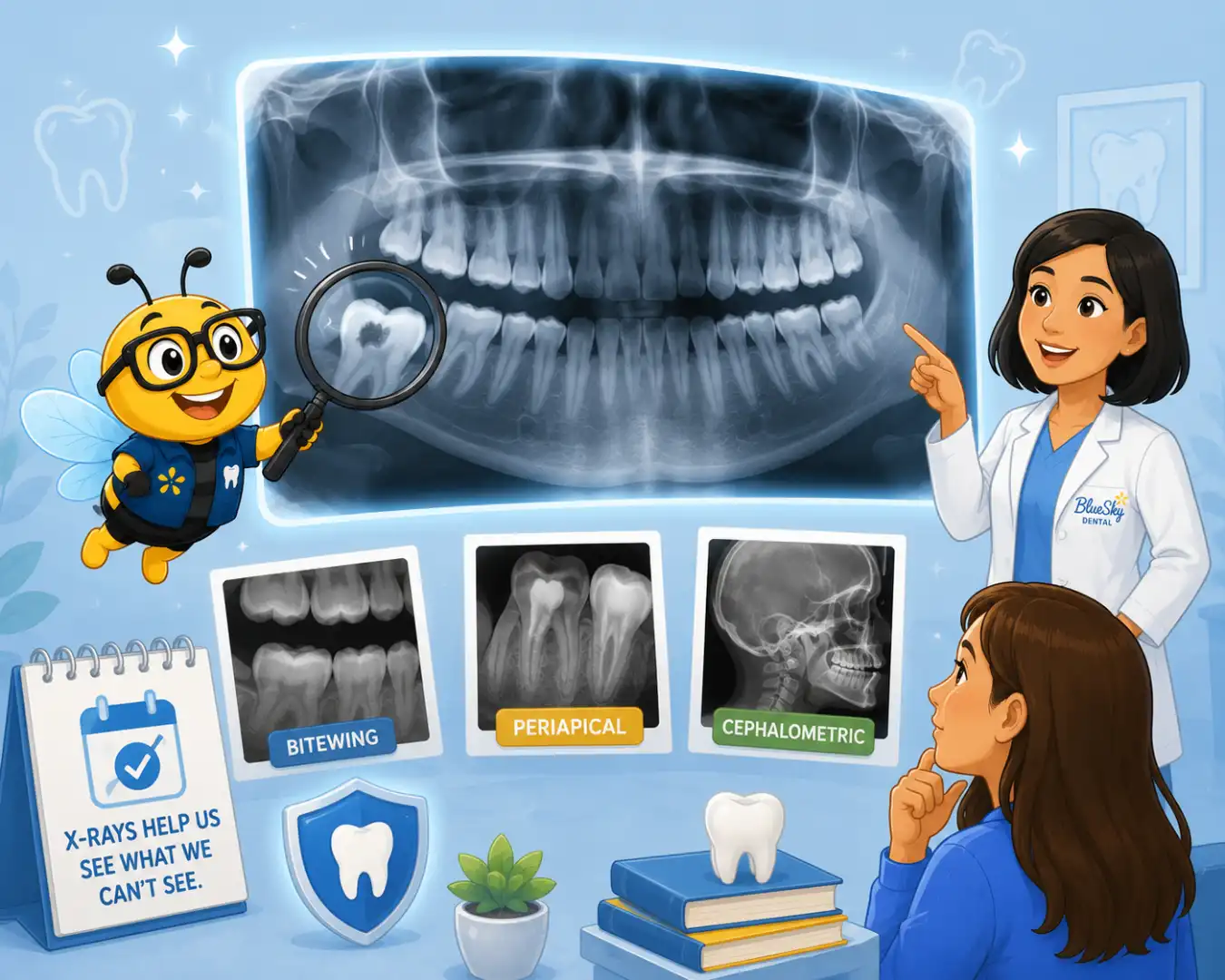
How Often Do You Really Need Dental X-Rays?
How often do you really need bitewings, panoramic, or 3D cone-beam X-rays? An evidence-based, risk-based guide to imaging schedules and radiation safety for adults and children.
Read more →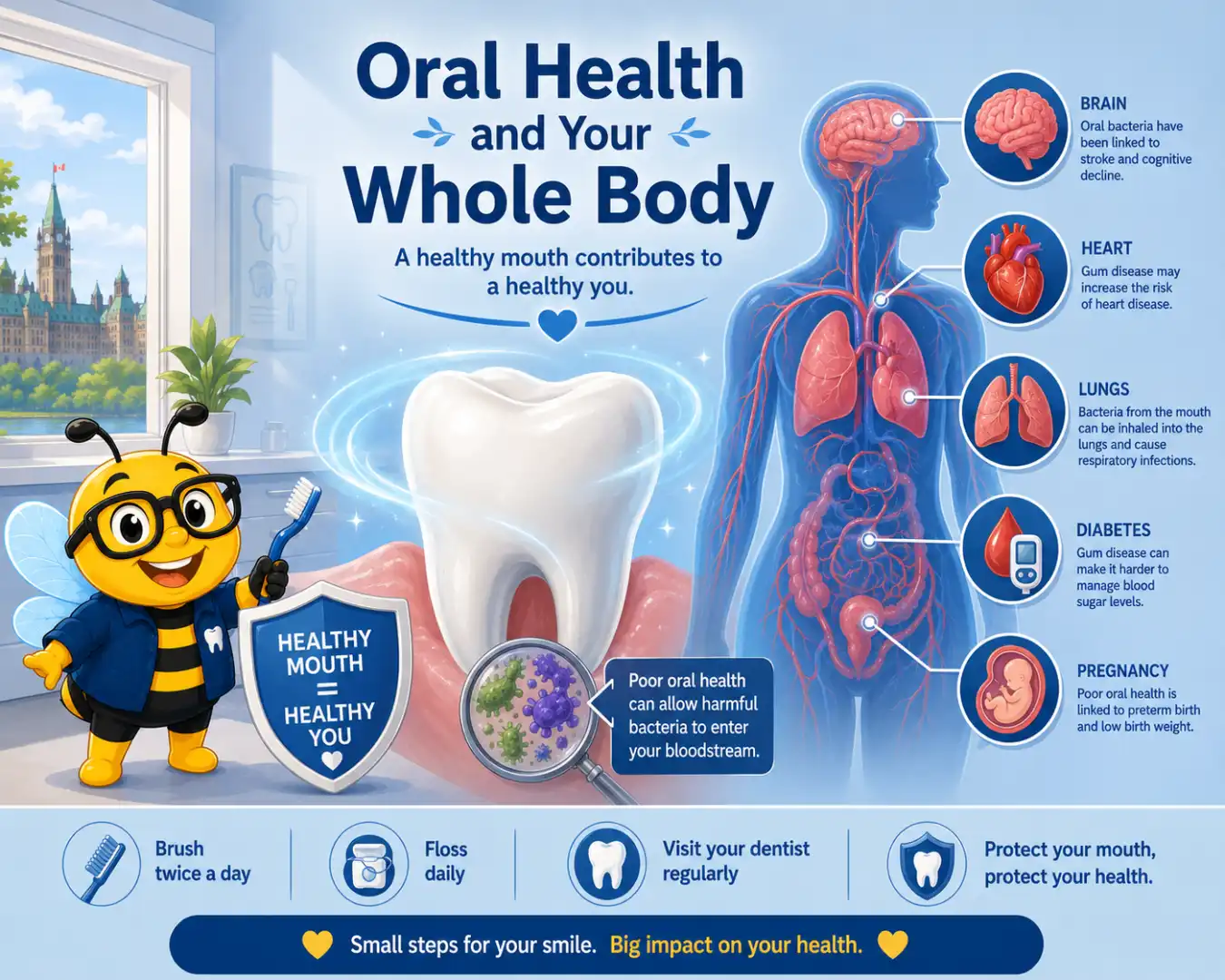
Oral Health and Your Whole Body
The proven links between gum disease and your heart, diabetes, and pregnancy: how the health of your mouth affects your whole body.
Read more →
Finding a Family Dentist in Nepean and Centrepointe
A practical guide for Nepean and Centrepointe families: what to look for in a dental practice, the services to expect, and how parking, hours, direct billing, and CDCP make family visits easy.
Read more →